Bring Your Industry. Build a New One.
How experience from other industries is helping build fusion
No one has ever built a stellarator fusion power plant, but we’re not exactly starting from scratch. Automotive production lines machine to tight tolerances at volume, aerospace supply chains hold together through design changes, battery factories automate processes that were experimental a decade ago, and industrial test labs qualify unfamiliar materials for a living.
What is new is not the capabilities but the industry. None of these industries has built a commercial fusion power plant before, so the standards, builders, suppliers and methods have to be built alongside the hardware.
That is why we hire lab and engineering technicians, procurement specialists and project coordinators alongside scientists and engineers. Arne, Paul, Sanath and Alessandra came to Proxima from roles across automotive, aerospace, battery technology and food production. None had worked in fusion before. Today, their experience shapes how we test, build, source, and plan production for our stellarator magnets. And what fusion energy careers can look like for people who've never worked in the industry before.
Their stories follow the hardware from the test bench to process standards, supplier conversations and production planning. Together, they show how skills developed in other industries can help turn fusion designs into machines that work.
Planning the Path to Production: From Aerospace and Automotive to Fusion
Alessandra came to production planning through literature, food production, automotive and aerospace. She calls herself a coordinator, or a puppeteer on a less formal day.
A cable moves through several suppliers for taping and jacketing. The work often crosses borders, with teams and suppliers in different countries contributing to the same process. “We are not there the whole time. We need to trust them, and they need to trust us.” Since joining, she has structured how dependencies are mapped in a planning tool, showing where work stands and how long it should take. Proxima’s “one mission, one team” principle is easier to say and more complicated to schedule.
In earlier roles, “you are a piece of that part, and you don’t need to know about the rest.” At Proxima, she sees the full process and shares both the setbacks and wins. “You are on that roller coaster, and that’s part of the fun.”
July’s €411 million funding round helps not only buy equipment, but also move faster. “Time really means money,” she says. When one cable design was still undecided, the team made sure material was available in several possible sizes so production could continue as soon as the specs were confirmed. That saved four weeks. With first-of-a-kind hardware, having the right materials ready can prevent one open detail from slowing the wider program.
When Alessandra joined less than a year ago, the lab was only a few months old. Now, every process brought in house raises practical questions about material storage and cable flow. Those answers are helping shape Proxima’s magnet factory in Gundremmingen.
Test Engineering in Fusion: fix the bench, not the sample
Before joining Proxima, Arne spent his entire career at Bosch, where he began and apprenticeship as a teenager and built his background in mechanics, automation and industrial electrical engineering. He learned milling, lathe work and computer-aided design (CAD), skills he still uses at home for fun projects in his basement. At Proxima, that range matters because faults in a test setup often sit between mechanics, wiring, controls and software.
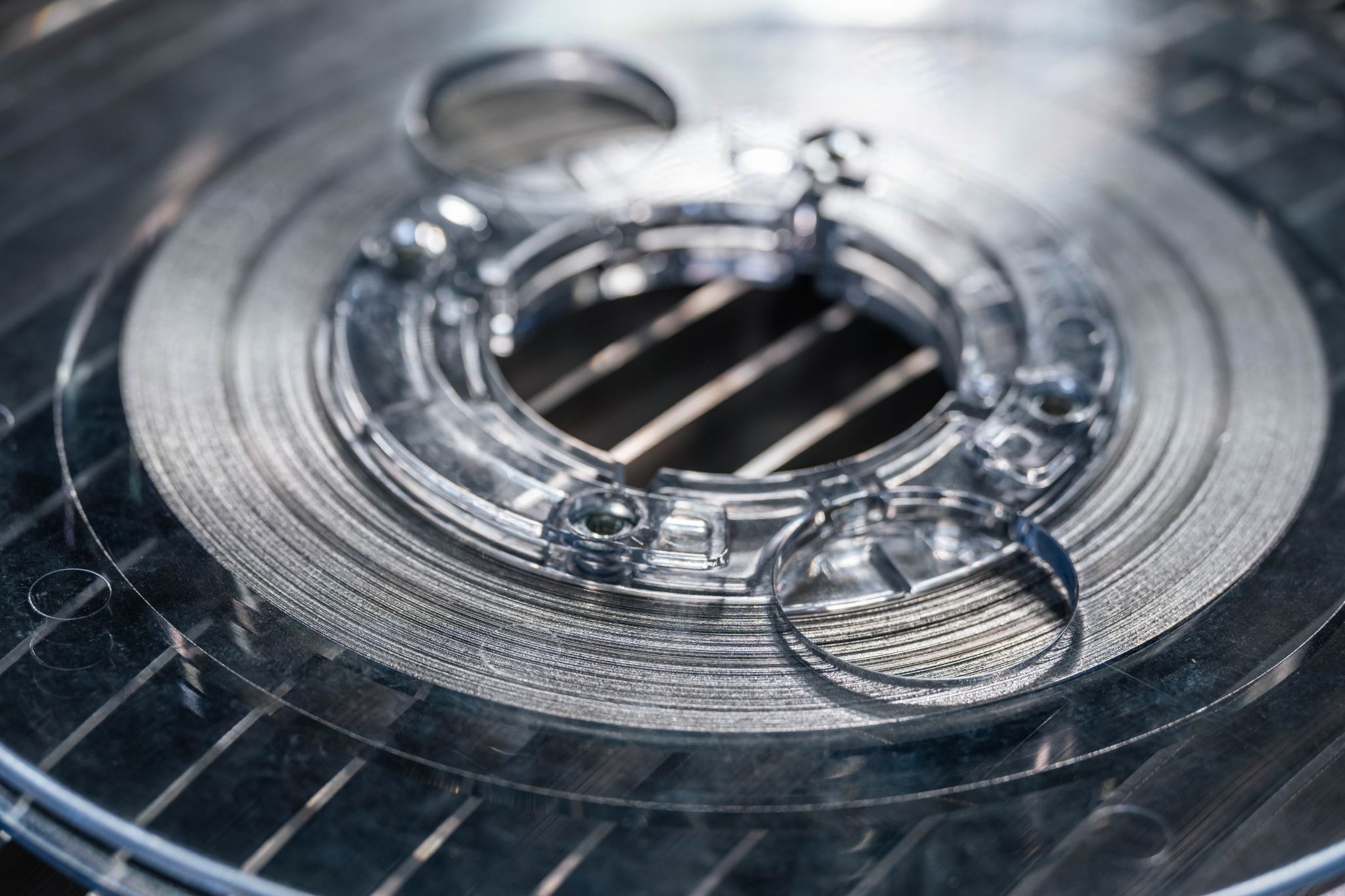
What fascinates Arne most is high temperature superconducting (HTS). Earlier in his career, he could not have imagined working with a material this thin carrying so much current. “Three microns carrying 200 amps. People don’t believe it.” His curiosity and mix of skills soon proved useful at Proxima. One test bench could not measure the tape volumes the team needed. Rather than limit the samples and change the test, they simplified the equipment and software until the setup was reliable and easy to teach. “Make it easy and repeatable. Then do your test.”
Japan was also his first long haul flight. “I’ve never been that long on a plane.” At the other end was a two week testing campaign, running three shifts a day, shared with colleagues from magnet and mechanical engineering, process development and technical operations. It was intense, and nobody noticed until it was over. “Nobody felt tired, that came afterwards.” Between shifts they went out to dinner together, which is probably why. The pictures that reached our weekly All Hands gave nothing away either.
On a schedule like that, the handwork decides how much each shift delivers, and one of the skills that mattered the most was one that proved essential. Arne spent years soldering printed circuit boards (PCBs), and he can read a joint by watching the solder move. “It’s a short shiny liquid, and then you know it’s fine.” That impressed one of our Japanese partners enough that they half joked about keeping him in their team.
From Automotive Systems to Fusion Hardware
Paul, our lab technician, came to fusion through automotive, electric mobility and battery technology. He trained as an automotive mechatronics technician specializing in systems and high-voltage technology at Mercedes-Benz, then studied industrial design and worked across electric motorcycles, design engineering and battery hardware.
Automotive taught Paul planning and repeatability. At Proxima, he added another skill: adapting quickly without lowering the standard. Cable production requires a different touch. “Tooling is tooling,” but delicate HTS tape needs careful handling, and vacuum equipment brings its own constraints.
“Clear communication is part of good technical work.” And “working cleanly” can mean leaving no visible mess for a team, or keeping unnecessary materials away from a process critical area for another. He closes that gap by asking what the other team needs and turning it into a shared instruction.
Before joining Proxima, he expected fusion to be more complicated in practice. One technical interview changed that. "It's not sci-fi. It's an engineering project that is challenging, but solvable. It’s all moving fast, but always step by step."
Sourcing Components for a Part That's Still Changing"
Sanath works on aerospace procurement's newest frontier: components for Proxima's magnet program. Three and a half years in aerospace procurement taught him respect for tight tolerances, but fusion raised the bar. "They say it’s rocket science, but actually fusion takes it to the next level."
“In automotive, you have a paved road. In aerospace, it’s a mud road, but people have taken that path before. In fusion, there’s no road yet.” That demands adaptability and flexibility from our suppliers. When engineers change a part during production, Sanath has to revisit the cost, timeline and supplier agreement while keeping trust intact. Those relationships matter for our supplier partnerships. “In automotive, if it’s not you, there are a hundred other suppliers. In fusion, there are a handful and they are making a bet with us.”
His first question to an engineer is the technical outcome. "Tell me what you want. Let's start with that." Cost, lead time and feasibility are Sanath’s to carry, and keeps his work challenging and rewarding every day.
Build the Next Industry with Us
The industries we come from may be different, but many of the skills we need are not. Machining, CAD, automation, test engineering, assembly, supplier management and production planning are all part of building a stellarator. That is why experience from automotive, aerospace, energy, robotics, semiconductors and advanced manufacturing transfers well to our work.
What we do is not always fully defined from the start. That environment suits people who are comfortable stepping beyond a fixed job description to solve the problems that matter.
If you have built, tested, industrialized, sourced or planned complex hardware, you may already have skills fusion needs. Proxima Fusion's hiring spans Munich, Oxford, and Zurich - manufacturing jobs, engineering, technical operations, procurement, and supply chain.. Explore our open roles and bring what your industry taught you to fusion.
Related Stories