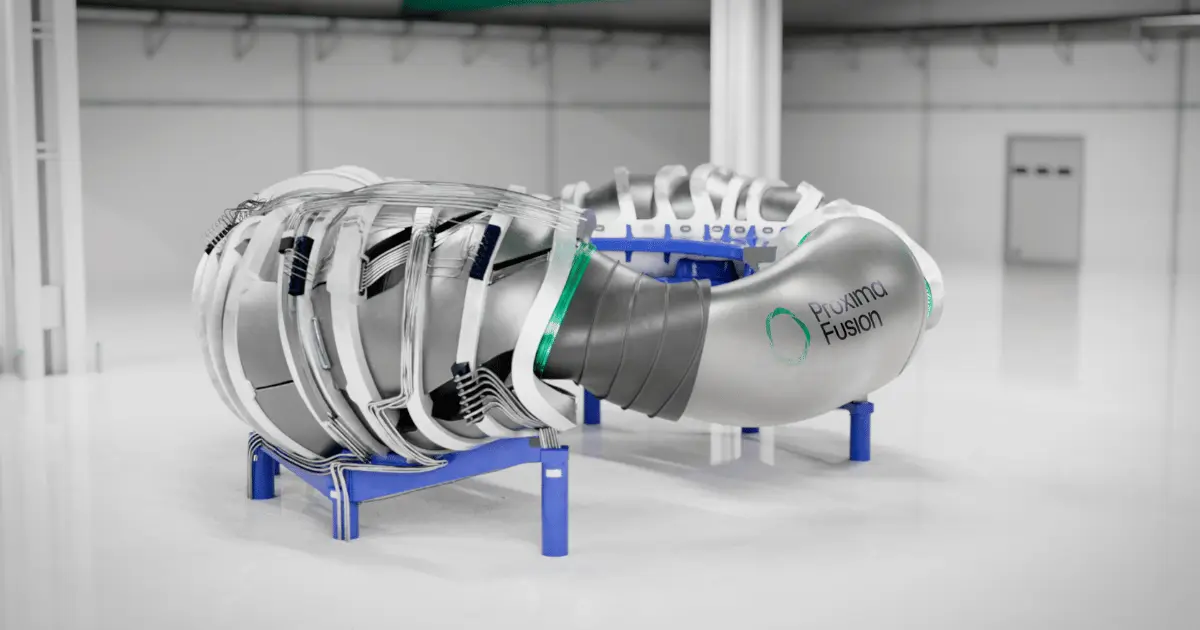
Inside HTS Tape R&D: How We Test High-Temperature Superconductors for Fusion Magnets
High-temperature superconducting (HTS) tape is the material that makes Proxima Fusion's stellarator magnets possible. It is thinner than a human hair, can behave differently from one reel to the next, and has to be tested in powerful magnetic fields at very low temperatures. This is the story of how a three-person team in Switzerland built that testing effort, from a lab near the Paul Scherrer Institute to two campaigns at Tohoku University in Japan.
-------
"There's cows, a particle accelerator and not much else. Well, besides us."
That is Ross Taylor, magnet engineer, describing the view from Proxima's Swiss office. It is a fair summary. It also undersells what has happened there. The office began with three people and HTS (high-temperature superconducting) expertise from day one.
Three people and a difficult material: HTS research in Switzerland
Three years ago, Sofia Viarengo had planned to join Proxima in Munich. Two weeks before she moved, the Swiss site opened, and she became one of its first three people. She brought a PhD in modelling superconductors. A candid conversation with CEO Francesco Sciortino helped convince her to leave research: "I can't tell you exactly where we'll be in a few years, but I believe we can build something meaningful together."
Switzerland offered more than a new home. Proxima's lab is close to the Paul Scherrer Institute, where researchers and engineers have decades long experience with magnets and where specialised infrastructure can test superconducting cables under demanding conditions. Early collaboration helped with coil design, winding tools and practical learning. Being close also makes the essential iterations easier, such as checking whether a component fits before preparing the next test.
What is HTS tape? The material nobody quite believes
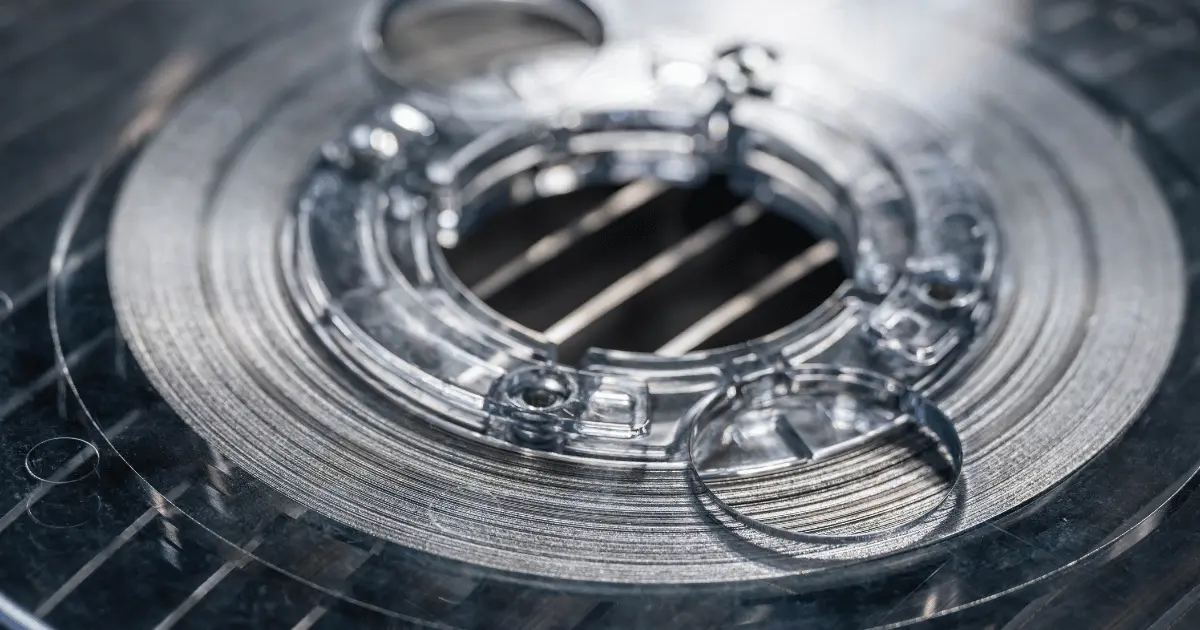
An HTS tape is a ribbon only about a tenth of a millimetre thick. The superconducting layer inside it is thinner again, only a few micrometres. That layer is a ceramic called REBCO (rare-earth barium copper oxide). Cool it down and it can carry enormous current with no electrical resistance.
Arne, one of our lab technicians, loves seeing people's reactions when he explains the numbers. Even experienced engineers are surprised by how much electrical current such a thin superconducting layer can carry.
Superconductivity was first seen in 1911, when Dutch physicist Heike Kamerlingh Onnes found that the electrical resistance of mercury dropped to zero a few degrees above absolute zero. For decades, scientists believed it could only happen at such extremes. The leading theory, developed in 1957, suggested nothing would superconduct above about 30 kelvin (around -243 °C), and the metals that did needed scarce, expensive liquid helium to stay cold.
Then, in 1986, Johannes Bednorz and Karl Müller found a ceramic that superconducted at 35 kelvin. Swapping lanthanum for yttrium soon pushed that to 92 kelvin, above the boiling point of liquid nitrogen, a far cheaper coolant. They won the Nobel Prize the following year. "High temperature" is relative: 92 kelvin is still around -181 °C.
But the discovery broke the rules of the established theory, and the underlying physics is still not fully settled.
Sofia's engineering response is practical: "They work. I can use them, why not?"
The harder part is that the tape does not always behave the same way. Pieces cut from one reel can produce different measurements, and performance changes with temperature, magnetic field and mechanical loading. Since HTS tape is central to the magnets, guessing is not an option, which is why testing is so important, and our team travels the world for it.
How we test HTS tape: it starts with the decision you need to make
Before anyone books a flight for a test, Ross builds the test plan. High field magnet time is scarce and competitive, so he works in three tiers: the minimum evidence the team needs, a realistic target and stretch goals for any time left. The priority is always the result that could change a decision. "There's no point doing it and then going, ah, we needed this ages ago, and now decisions which we needed to make haven't been informed."
The HTS project has taken Proxima teams across the world. The first trip was to the Robinson Research Institute in New Zealand, where Ross had done his PhD. Preliminary screening there shaped two later campaigns at Tohoku University in Sendai, Japan, where the team could study HTS samples in powerful magnetic fields and at the cryogenic temperatures that matter.
HTS testing at Tohoku University: fourteen days, three 24/7 shifts
The first Japan campaign spanned two weeks, with pairs working in eight-hour shifts to keep experiments moving around the clock. Each handover covered both the equipment and the thinking behind the plan, helping the next pair build on the previous shift's progress.
A shift could include sample preparation, cryogenic operation, control software and quick judgement when a test behaved strangely. Something usually did. As Ross puts it, you learn "how to troubleshoot if something goes wrong, because something almost always goes wrong."
No one person covered everything. Magnet specialists, mechanical engineers, technicians, software minded colleagues and research partners each held part of the answer. What happens quite frequently at Proxima is that we identify what's on the critical path and then pull in people to help move it forward, which means many engineers are working on short, focused "pop-up" projects (as we call them). The HTS test campaign was one of them.
Curious enough to join, trusted enough to lead
Janina Branke is a good example. She works on mechanical engineering for robotic and remote maintenance. HTS is not her day job. When the call went out for engineers to join the first Japan campaign, she volunteered because she was curious and the team needed another pair of hands. She learned the process, then returned for the second campaign as a shift lead. Ross's summary is simple: "She did really, really well, so I asked her to come back with us."
The night shifts developed their own culture too. Janina's watch stopped working near the high field magnet, and "Pump It Up" became the soundtrack while the team pumped liquid helium. The microuniverse built around testing in Japan came with its own routines, its own inside jokes, all developed during the extra demanding shifts. We cannot thank this team enough for their hard work.
The moment the mindset changes
Sofia has noticed a pattern among people arriving at Proxima from other industries. They ask why something has always been done a certain way and suggest another route. They also, Sofia says with a smile, "slightly underestimate the complexity."
Near the end of a campaign, one technician admitted he had expected the HTS experts to know exactly why the tape behaved as it did. When the answer was that further testing was needed, Sofia's reply was simple: "Sometimes you just don't know." And that comes from people who know a lot!
These campaigns only work when material expertise, test planning and practical engineering come together. Sofia helps the team understand how the material is behaving. Ross makes sure each test answers a question that matters, Janina's experience shows how quickly someone from another discipline can learn enough to lead a shift. The technicians make sure the plan works on real equipment.
Each better test helps turn a material only a few micrometres thick into real fusion hardware and brings commercial fusion closer. As demand for HTS tape grows, we are also working with the State of Lower Saxony on Europe's first large-scale fusion-grade HTS tape facility.
If you want to help build the magnets a stellarator power plant needs, explore our open roles at Proxima Fusion.
HTS Tape FAQ
What is HTS tape?
HTS (high-temperature superconducting) tape is a thin tape, thinner than a human hair, with a ceramic layer that carries electrical current with no resistance when it is cooled. It is wound into cable and then into the powerful magnets used in fusion machines.
What does "high-temperature" mean in HTS?
It is relative. HTS materials superconduct at around 77 kelvin (-196 °C, the boiling point of liquid nitrogen) or above, compared with the few kelvin that older superconductors need. That is still extremely cold.
What is REBCO?
REBCO stands for rare-earth barium copper oxide, the ceramic material that superconducts inside most HTS tape. It has to be made as a very thin, near-perfectly aligned layer, only a few micrometres thick, which is why making it is difficult.
Why does a stellarator need HTS magnets?
HTS tape can carry large currents in very strong magnetic fields, which allows the magnets, and therefore the whole machine, to be more compact than with older superconductors. A stellarator creates its magnetic cage entirely with external magnets, so the quality of those magnets matters.
Why does HTS tape need so much testing?
Tape cut from the same reel can give different measurements, and its performance changes with temperature, magnetic field and mechanical load. Because the magnets depend on it, the team tests samples under conditions that match the real machine.
What is critical current?
The critical current is the most current an HTS tape can carry while it stays superconducting. It depends on the temperature, the strength of the magnetic field and the angle between the tape and the field.
When was high-temperature superconductivity discovered?
In 1986, when Johannes Bednorz and Karl Müller found a ceramic that superconducted at 35 kelvin, higher than the leading theory allowed.
Do I need to be a superconductivity expert to work on HTS at Proxima?
No. The HTS teams include material experts, magnet specialists, mechanical engineers, technicians and software engineers, and colleagues from other disciplines have joined test campaigns and led shifts. See our open positions if you'd like to join them.
Related Stories